Treated by Dr. Praneeth Putti at Sharp Vision Eye Hospital
A comprehensive eye exam in Hyderabad is a thorough evaluation of your vision and eye health, checking for refractive errors, eye diseases, and overall ocular wellness. Regular eye examinations are essential for detecting conditions like glaucoma, cataracts, diabetic retinopathy, and macular degeneration in their early stages when treatment is most effective. At Sharp Vision Eye Hospital, Dr. Praneeth Putti utilizes state-of-the-art diagnostic equipment to provide detailed eye assessments for patients of all ages.
A complete evaluation of vision and eye health including visual acuity testing, refraction, intraocular pressure measurement, slit lamp examination, and dilated fundus examination to detect any ocular abnormalities or diseases.
Specialized eye examination for children to assess visual development, screen for amblyopia, strabismus, refractive errors, and ensure proper eye alignment and coordination essential for learning and development.
Focused examination for patients with diabetes to detect diabetic retinopathy, macular edema, cataracts, and glaucoma through dilated fundus examination, OCT imaging, and retinal photography to prevent vision loss.
Multiple factors can contribute to the development and progression of this condition.
Eye Exam develops gradually. Recognising symptoms early gives you more treatment options.
From conservative to surgical — we always start with the least invasive option first.
A structured, patient-first approach from first visit to full recovery.
Sharp Vision Eye Hospital begins with a detailed medical and ocular history, documenting current symptoms, medications, family history of eye diseases, and systemic conditions like diabetes or hypertension that may affect eye health.
Dr. Praneeth Putti employs state-of-the-art diagnostic equipment including autorefractor, optical coherence tomography (OCT), fundus photography, visual field testing, and corneal topography to obtain comprehensive data about your eye health and visual function.
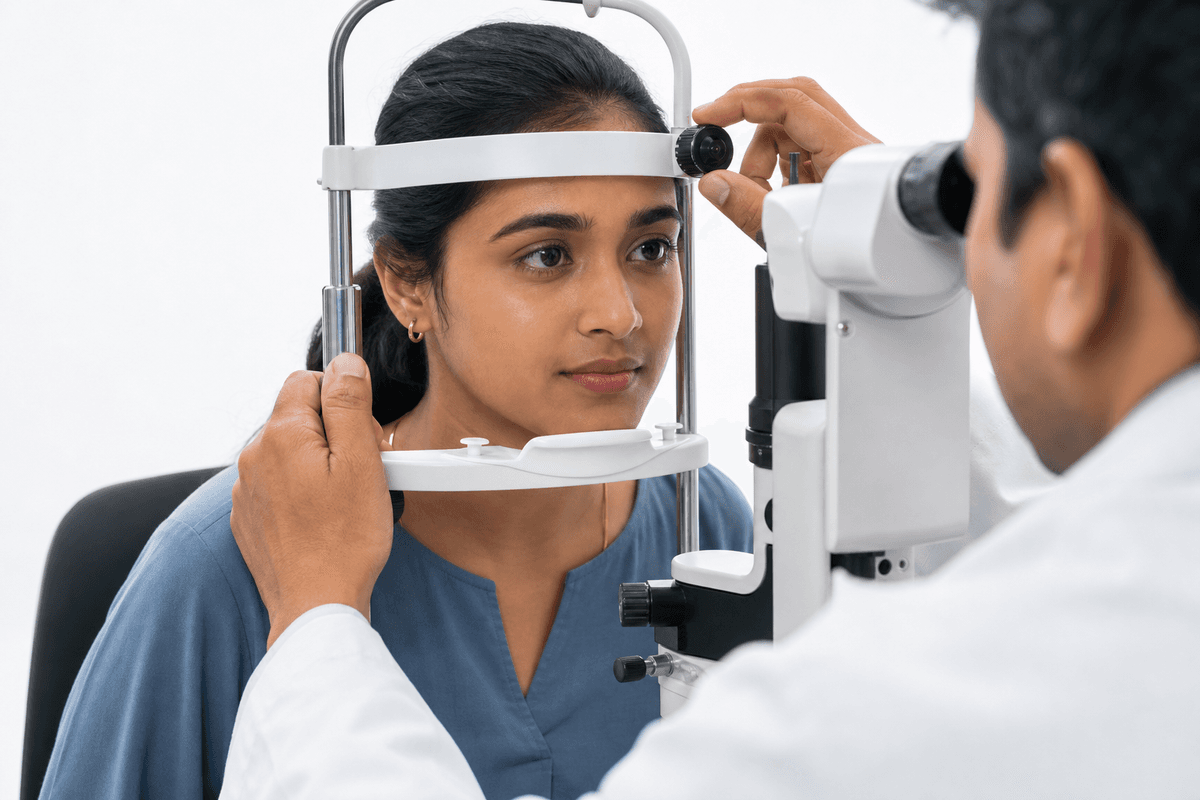
A complete eye examination includes visual acuity testing, refraction, slit lamp biomicroscopy, intraocular pressure measurement, dilated fundus examination, and assessment of ocular motility and alignment to detect any abnormalities or early signs of disease.
Based on examination findings, our team provides clear explanations of any detected conditions, discusses treatment options, prescribes corrective lenses if needed, and schedules follow-up appointments or specialist referrals to ensure optimal eye health and vision outcomes.
What to expect at each phase of recovery.
If pupil dilation was performed, expect blurred near vision and light sensitivity for 4-6 hours. Sunglasses are recommended for comfort, and you should avoid driving until vision returns to normal.
If new glasses or contact lenses are prescribed, there may be a 1-2 week adaptation period as your eyes adjust. Follow all instructions for contact lens wear, cleaning, and replacement schedules to maintain eye health.
Schedule annual comprehensive eye exams for routine monitoring, or more frequent visits if you have chronic conditions, high-risk factors, or detected eye diseases requiring closer surveillance and management.
Comprehensive eye exams enable early identification of glaucoma, macular degeneration, diabetic retinopathy, and cataracts before significant vision loss occurs, allowing for timely intervention and better treatment outcomes.
Accurate refractive correction through updated eyeglass or contact lens prescriptions significantly improves visual clarity, reduces eye strain, enhances quality of life, and improves performance in work, school, and daily activities.
Eye examinations can reveal signs of systemic diseases like diabetes, hypertension, autoimmune disorders, and neurological conditions through retinal and vascular changes, prompting appropriate medical referrals for comprehensive healthcare management.
Regular comprehensive eye exams with appropriate treatment and monitoring help preserve vision throughout life, prevent blindness from treatable conditions, and maintain independence and quality of life as you age.
Neglecting regular eye exams can result in undetected vision problems that impair daily activities, work performance, and safety, particularly with driving. Serious eye diseases like glaucoma and diabetic retinopathy often develop without symptoms and can cause irreversible vision loss if not detected and treated early. Uncorrected refractive errors lead to chronic eye strain, headaches, and reduced quality of life, while missed systemic disease indicators delay critical medical interventions.
Schedule a comprehensive eye exam annually if you are an adult, every 1-2 years if you are under 40 with no risk factors, or more frequently if you have diabetes, family history of eye disease, or are over 60. Seek immediate evaluation if you experience sudden vision changes, eye pain, flashes of light, floaters, double vision, or any injury to the eye. Children should have their first eye exam at 6 months, again at 3 years, and before starting school to ensure proper visual development.
Early treatment means more options and better outcomes. Book a consultation to understand your condition and explore the right path forward.