Treated by Dr. Praneeth Putti at Sharp Vision Eye Hospital
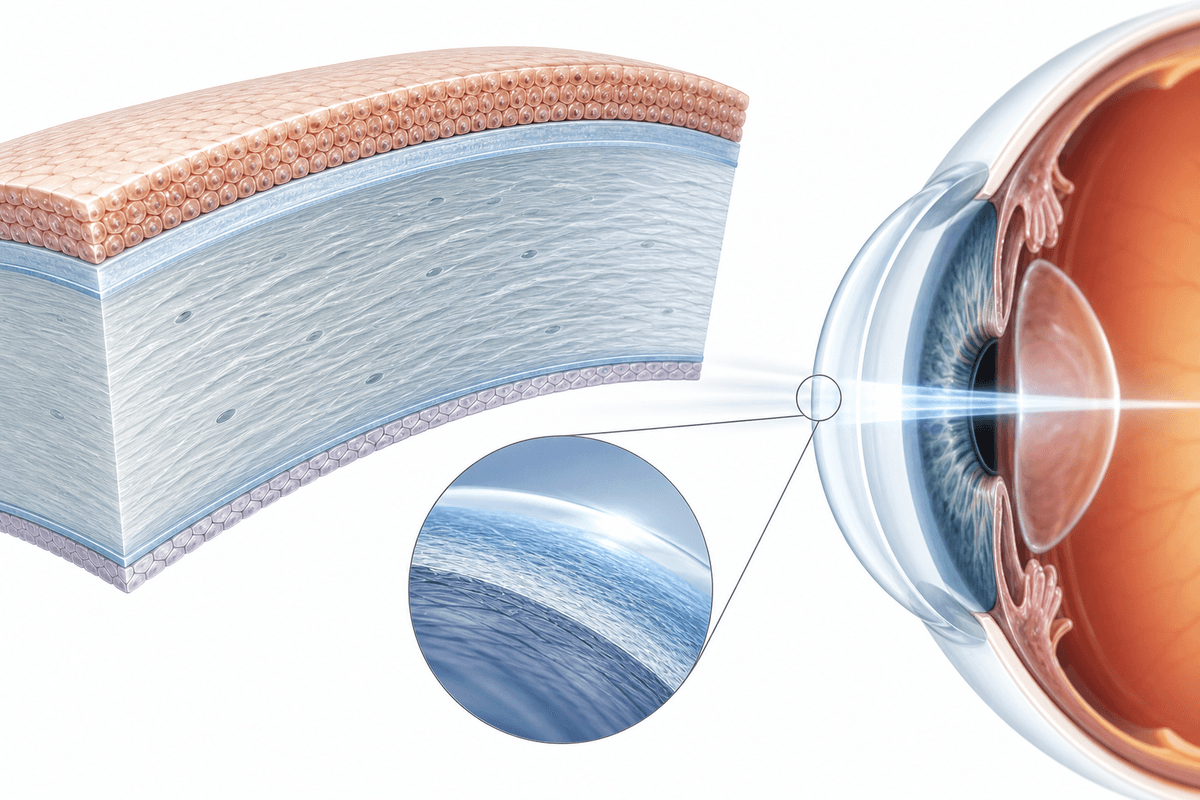
The cornea is the transparent, dome-shaped front surface of the eye that plays a crucial role in focusing vision and protecting the eye from external elements. In Hyderabad, corneal disorders range from infections and injuries to degenerative conditions that can significantly impact visual clarity and eye health. At Sharp Vision Eye Hospital, Dr. Praneeth Putti provides comprehensive evaluation and treatment for all corneal conditions using advanced diagnostic technology and evidence-based therapeutic approaches.
Inflammatory condition of the cornea caused by bacteria, viruses, fungi, or parasites. Can result from contact lens wear, trauma, or compromised immunity. Requires prompt treatment to prevent scarring and vision loss.
Inherited genetic disorders causing progressive clouding or structural changes in corneal layers. Typically bilateral and symmetrical, affecting vision quality. May require specialized treatment or corneal transplantation in advanced cases.
Progressive thinning and bulging of the cornea into a cone shape, causing irregular astigmatism and distorted vision. Most commonly develops during teenage years or early twenties. Treatment ranges from specialty contact lenses to corneal cross-linking or transplantation.
Multiple factors can contribute to the development and progression of this condition.
Cornea develops gradually. Recognising symptoms early gives you more treatment options.
From conservative to surgical — we always start with the least invasive option first.
A structured, patient-first approach from first visit to full recovery.
Sharp Vision Eye Hospital conducts detailed slit lamp examination, corneal topography, pachymetry, and specular microscopy to assess corneal structure, thickness, and endothelial health. Dr. Praneeth Putti personally reviews all diagnostic findings to develop an accurate diagnosis.
Based on the specific corneal condition, severity, and patient lifestyle needs, our team develops a customized treatment strategy ranging from medical management to advanced surgical interventions. We discuss all options, expected outcomes, and recovery timelines with patients and their families.
Sharp Vision Eye Hospital utilizes state-of-the-art technology including femtosecond laser-assisted procedures, corneal cross-linking systems, and modern microsurgical techniques. Dr. Praneeth Putti ensures precise execution of treatment protocols with continuous monitoring for optimal results.
We provide structured post-treatment monitoring with regular corneal assessments to track healing, manage medications, and detect any complications early. Our dedicated team ensures patients receive ongoing support and adjustments to treatment as needed for sustained corneal health.
What to expect at each phase of recovery.
Initial healing phase with prescribed eye drops, protective eyewear, and activity restrictions. Patients may experience mild discomfort, light sensitivity, and blurred vision. Follow-up visits scheduled to monitor early healing response and adjust medications.
Gradual improvement in comfort and visual clarity as corneal tissue stabilizes. Continued use of anti-inflammatory and lubricating drops. Suture adjustments or removal may be performed if applicable. Regular topography assessments track corneal shape changes.
Cornea reaches functional stability with continued gradual visual improvement. Contact lens fitting or refractive correction may be optimized. Annual monitoring ensures long-term corneal health and early detection of any complications or disease recurrence.
Most patients experience significant improvement in visual acuity and quality, with many achieving functional vision for daily activities. Advanced treatments can restore vision to levels allowing driving, reading, and professional work.
Interventions like corneal cross-linking successfully halt progression of ectatic disorders in over 95% of cases. Early treatment prevents the need for more invasive procedures and preserves natural corneal tissue.
Successful treatment resolves infections, reduces scarring, and maintains corneal transparency. Modern surgical techniques achieve excellent graft survival rates exceeding 90% at five years for appropriate candidates.
Patients report substantial improvements in daily functioning, reduced dependency on visual aids, and increased confidence in social and professional settings. Pain relief and comfort restoration significantly enhance overall well-being.
Untreated corneal conditions can lead to progressive vision loss, permanent corneal scarring, and potentially irreversible blindness. Infections may spread deeper into the eye causing endophthalmitis, a sight-threatening emergency. Progressive conditions like keratoconus can advance to severe stages requiring more complex surgical interventions with longer recovery and reduced success rates.
Seek immediate medical attention if you experience sudden eye pain, rapidly worsening vision, significant redness, or discharge from the eye. Contact lens wearers who develop discomfort, redness, or blurred vision should discontinue use and see an ophthalmologist promptly. Anyone with known corneal conditions should maintain regular follow-up appointments and report any changes in symptoms or vision quality to Dr. Praneeth Putti at Sharp Vision Eye Hospital.
Early treatment means more options and better outcomes. Book a consultation to understand your condition and explore the right path forward.