Treated by Dr. Praneeth Putti at Sharp Vision Eye Hospital
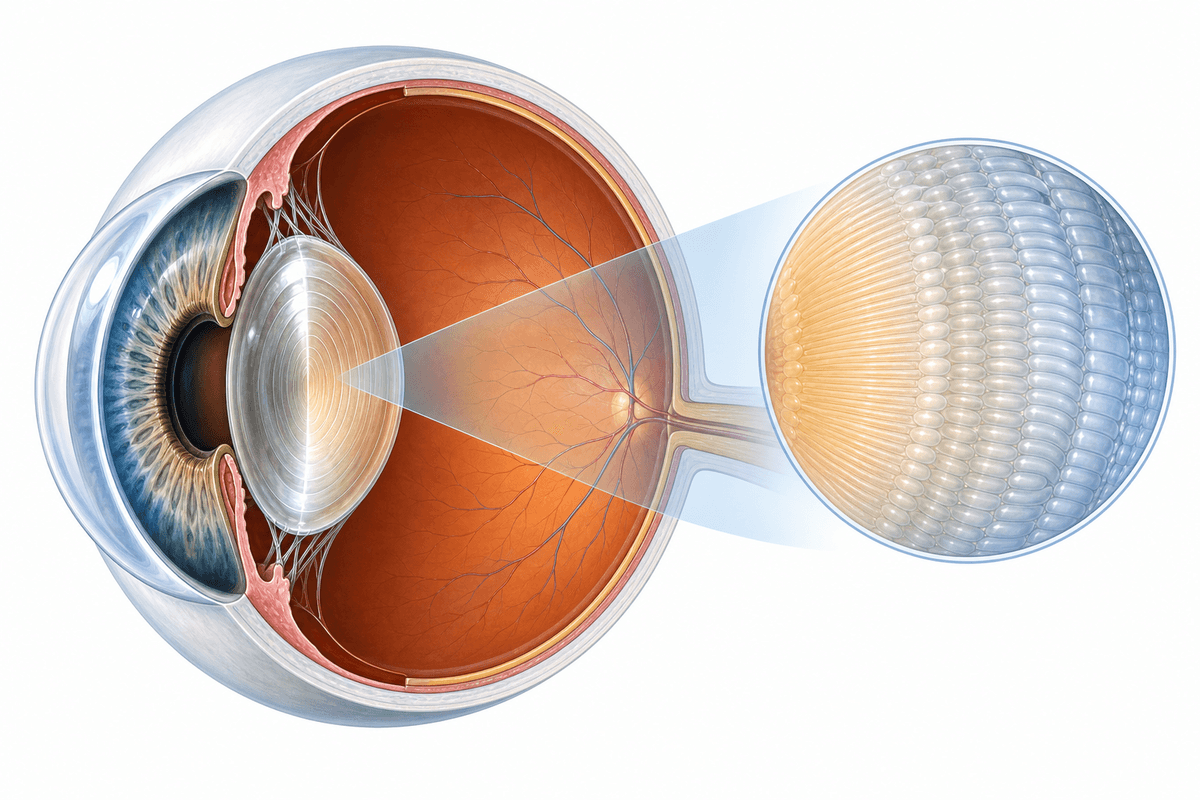
Intraocular lenses (IOLs) are artificial lenses implanted in the eye during cataract surgery to replace the eye's natural clouded lens, helping patients in Hyderabad regain clear vision. These medical-grade lenses are designed to restore focusing power and can correct refractive errors like nearsightedness, farsightedness, and astigmatism. Dr. Praneeth Putti at Sharp Vision Eye Hospital specializes in advanced lens implantation procedures, offering patients personalized lens selection based on their visual needs and lifestyle requirements.
Standard intraocular lenses that provide clear vision at one fixed distance, typically set for distance vision. Patients usually need reading glasses for near tasks after monofocal lens implantation.
Premium lenses with multiple focal points that allow clear vision at various distances including near, intermediate, and far. These advanced lenses reduce dependence on glasses for most daily activities.
Specialized intraocular lenses designed to correct astigmatism along with cataracts. These lenses have different powers in different meridians to compensate for the irregular corneal curvature.
Multiple factors can contribute to the development and progression of this condition.
Lenses develops gradually. Recognising symptoms early gives you more treatment options.
From conservative to surgical — we always start with the least invasive option first.
A structured, patient-first approach from first visit to full recovery.
Sharp Vision Eye Hospital conducts detailed discussions about available lens options, lifestyle needs, and visual expectations. Dr. Praneeth Putti reviews each patient's ocular health, refractive status, and daily activities to recommend the most appropriate lens technology for optimal personalized outcomes.
Our facility utilizes cutting-edge diagnostic equipment including optical biometry, corneal topography, and OCT imaging to gather precise measurements. These comprehensive assessments ensure accurate lens power calculations and help identify any pre-existing conditions that might affect lens selection or surgical approach.
Dr. Praneeth Putti develops an individualized surgical plan based on diagnostic findings, selecting the optimal lens type and surgical technique. The team reviews procedural details with patients, addressing concerns and setting realistic expectations about visual outcomes and recovery timelines.
Sharp Vision Eye Hospital provides comprehensive follow-up care with scheduled examinations to monitor healing and visual recovery. Our team ensures proper medication compliance, addresses any concerns promptly, and performs vision assessments to confirm that implanted lenses are functioning optimally for each patient's needs.
What to expect at each phase of recovery.
Patients experience rapid visual improvement within the first few days after lens implantation. Mild discomfort, light sensitivity, and fluctuating vision are normal as the eye heals. Prescribed antibiotic and anti-inflammatory drops prevent infection and reduce inflammation during this critical healing phase.
Vision continues to stabilize as the eye adapts to the new intraocular lens and inflammation resolves completely. Most patients resume normal daily activities including reading and computer work. Follow-up examinations ensure proper lens positioning and healing progress without complications.
Full visual potential is achieved as the brain adapts to the new optical system, particularly with multifocal or toric lenses. Final refraction determines if minimal prescription glasses are needed for specific tasks. Long-term outcomes remain stable with proper eye care and routine monitoring.
Over 95% of patients achieve significant improvement in visual acuity after intraocular lens implantation, enabling them to perform daily activities with greater independence and confidence. Most patients report satisfaction with their vision quality and lens choice.
Premium multifocal and trifocal lens recipients experience substantial reduction in glasses dependency, with many patients achieving complete spectacle freedom for most activities. Even standard monofocal lenses provide excellent uncorrected distance vision for driving and outdoor activities.
Patients report improved ability to read, drive, use digital devices, and participate in hobbies and recreational activities. The restoration of clear vision significantly enhances overall well-being, social engagement, and emotional health after lens replacement surgery.
Modern intraocular lenses are designed to last a lifetime with excellent biocompatibility and optical stability. Patients maintain improved vision for decades after implantation, though routine eye examinations remain important to monitor overall ocular health and detect age-related changes.
Delaying necessary lens replacement when cataracts significantly impair vision leads to progressive vision deterioration, increased fall risk, and reduced quality of life. Advanced cataracts become denser and harder, potentially complicating surgical removal and increasing the risk of complications. Prolonged visual impairment can result in loss of independence, social isolation, and decreased ability to perform essential daily activities safely.
Consult an ophthalmologist when experiencing progressive vision changes, difficulty reading, increased glare sensitivity, or challenges with night driving that interfere with daily activities. If diagnosed with cataracts, discuss lens options before vision significantly deteriorates to ensure timely intervention. Patients considering lens replacement should seek evaluation from experienced surgeons like Dr. Praneeth Putti at Sharp Vision Eye Hospital to explore personalized lens solutions that match their visual needs and lifestyle requirements.
Early treatment means more options and better outcomes. Book a consultation to understand your condition and explore the right path forward.