Treated by Dr. Praneeth Putti at Sharp Vision Eye Hospital
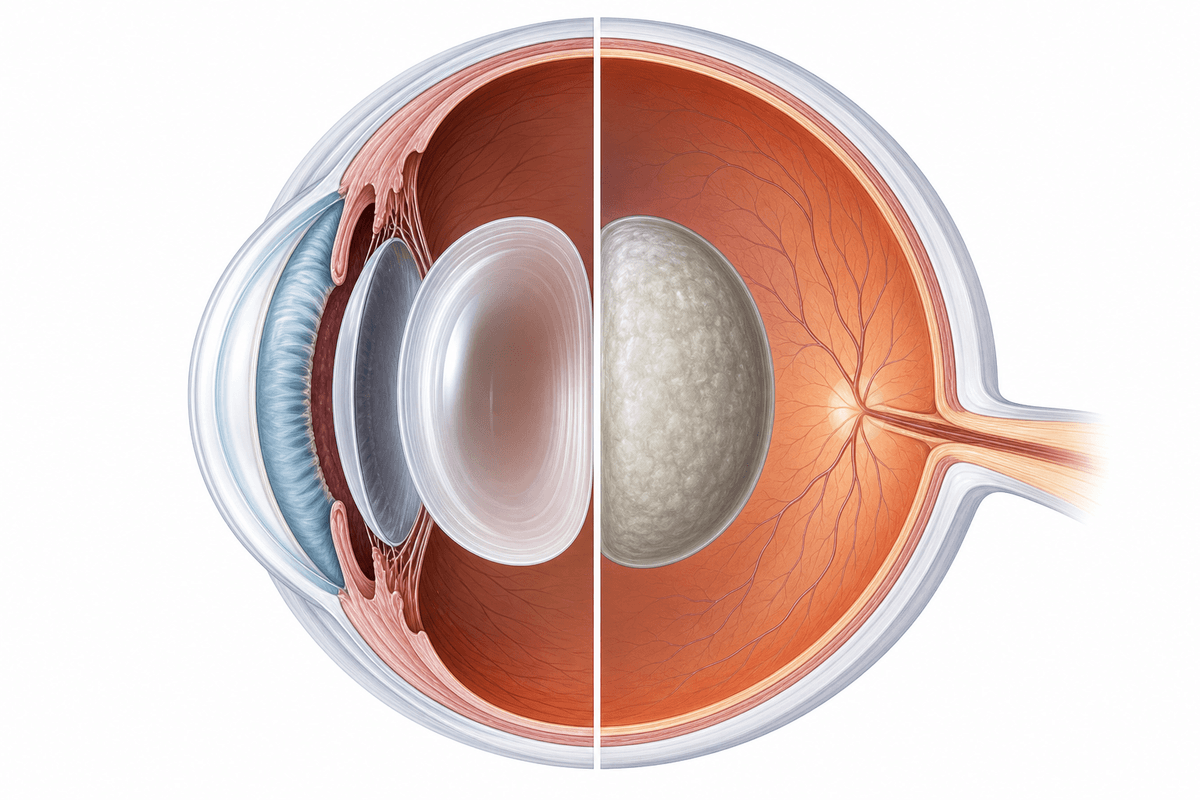
A cataract is a clouding of the eye's natural lens that affects vision clarity, commonly impacting individuals in Hyderabad as they age. The condition develops when proteins in the lens break down and clump together, causing blurred vision, glare sensitivity, and difficulty with daily activities. At Sharp Vision Eye Hospital, Dr. Praneeth Putti provides comprehensive cataract evaluation and advanced surgical treatment to restore vision.
Forms in the central nucleus of the lens, causing gradual yellowing and hardening that primarily affects distance vision and color perception
Develops in the lens cortex with spoke-like opacities extending from the periphery, causing glare and difficulty with contrast sensitivity
Occurs at the back of the lens just beneath the capsule, progressing rapidly and significantly affecting reading vision and causing halos around lights
Multiple factors can contribute to the development and progression of this condition.
Cataract develops gradually. Recognising symptoms early gives you more treatment options.
From conservative to surgical — we always start with the least invasive option first.
A structured, patient-first approach from first visit to full recovery.
Sharp Vision Eye Hospital conducts detailed slit-lamp examination, visual acuity testing, and dilated fundus examination to assess cataract density, type, and impact on vision quality
Dr. Praneeth Putti utilizes optical biometry, corneal topography, and IOL calculation technology to precisely measure eye dimensions and select the optimal intraocular lens power for each patient
Our team discusses surgical options, lens choices, and expected outcomes with patients, creating customized treatment plans that align with individual lifestyle needs, visual goals, and medical conditions
Sharp Vision Eye Hospital provides state-of-the-art phacoemulsification surgery in a modern operation theatre, followed by comprehensive postoperative monitoring to ensure optimal healing and visual rehabilitation
What to expect at each phase of recovery.
Patients experience rapid visual improvement with mild discomfort, use prescribed antibiotic and anti-inflammatory eye drops, wear protective eye shield at night, and avoid strenuous activities while the incision heals
Vision continues to stabilize and clarify, most daily activities can resume gradually, follow-up appointments monitor healing progress and intraocular pressure, and eye drop regimen continues as prescribed
Final visual acuity is achieved as the eye fully adapts to the intraocular lens, new eyeglass prescription can be determined if needed, all restrictions are typically lifted, and long-term monitoring schedule is established
Over 95% of patients achieve significantly improved vision, with most attaining 20/40 or better visual acuity, allowing return to normal daily activities including driving and reading
Removal of the yellowed cataractous lens restores natural color vision, with patients reporting brighter, more vibrant perception of their environment and improved contrast sensitivity
Elimination of lens opacities dramatically decreases glare sensitivity and halos around lights, significantly improving night driving comfort and safety for most patients
Successful cataract surgery enhances independence, reduces fall risk, improves reading ability, and allows patients to resume hobbies and social activities with renewed confidence
Untreated cataracts progressively worsen, leading to severe visual impairment that significantly impacts independence, increases fall risk, and diminishes quality of life. Advanced cataracts become harder and denser, making surgical removal more challenging with increased risk of complications. Complete vision loss in the affected eye can occur in extreme cases, along with secondary complications like inflammation or glaucoma.
Seek consultation with an ophthalmologist when you notice persistent blurred vision, difficulty reading or recognizing faces, increased sensitivity to glare, or frequent changes in eyeglass prescription. If cataracts interfere with daily activities such as driving, working, or enjoying hobbies, timely evaluation at Sharp Vision Eye Hospital is recommended. Dr. Praneeth Putti can assess the severity and determine the optimal timing for intervention based on your visual needs.
Early treatment means more options and better outcomes. Book a consultation to understand your condition and explore the right path forward.