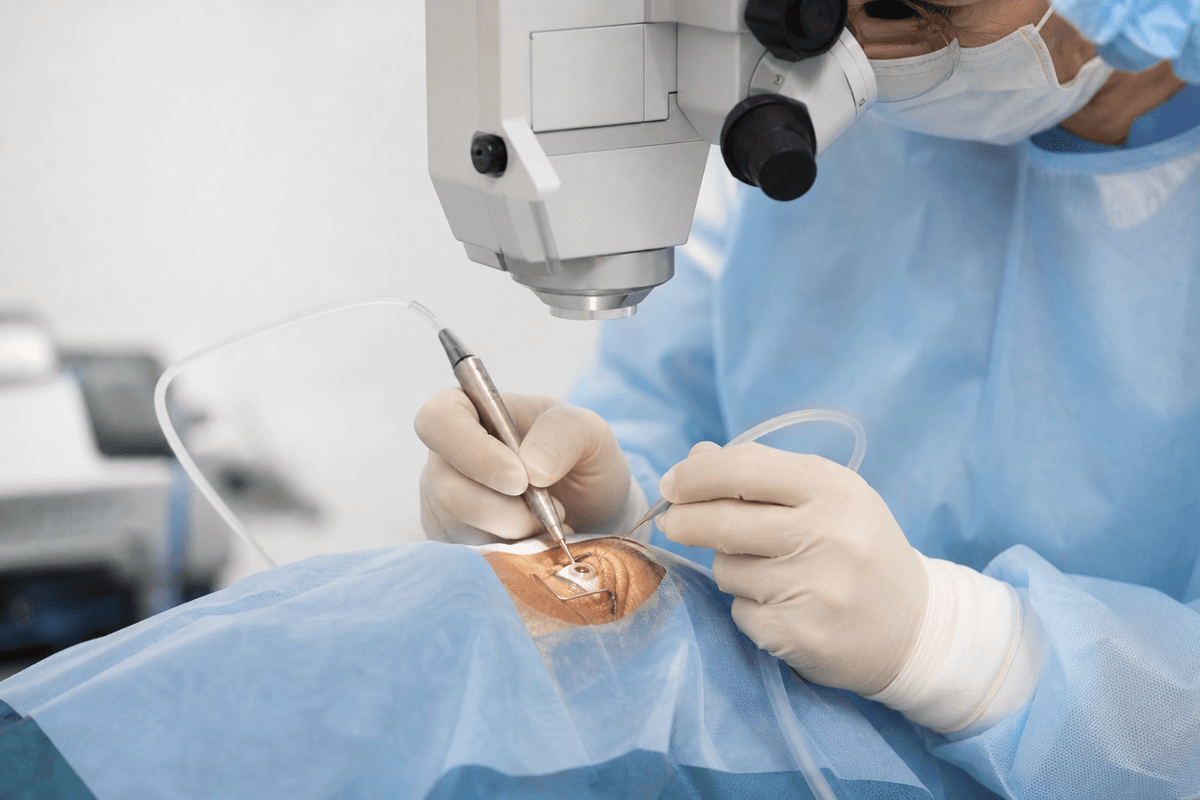
Performed by Dr. Praneeth Putti at Sharp Vision Eye Hospital
Cataract surgery is a procedure that removes the natural lens of your eye when it becomes cloudy and replaces it with a clear artificial lens called an intraocular lens (IOL). The surgery helps restore vision that has become blurred or dim due to cataracts. Sharp Vision Eye Hospital in Shaikpet offers this procedure, performed by Dr Praneeth Putti, to help patients regain clearer sight.
We believe in honest, upfront disclosure so you can make an informed decision.
A step-by-step look at what happens during this procedure.
The eye is numbed with local anaesthetic drops so you stay awake but feel no pain during the procedure.
A tiny cut is made at the edge of the cornea to access the lens inside the eye.
Ultrasound energy or a laser is used to break the cataract into small pieces, which are then gently removed.
A clear, folded intraocular lens is placed into the eye through the same incision and unfolds into position.
The incision is usually self-sealing and does not require stitches in most cases.
A structured, patient-first approach from first consultation to full recovery.
Sharp Vision Eye Hospital conducts detailed eye measurements and discusses lens options to tailor the procedure to your needs.
You will be made comfortable in the procedure room, and the surgical team will walk you through each step to keep you informed and calm.
After the procedure, you will rest briefly before being discharged with eye drops and clear instructions for home care.
The team schedules follow-up appointments to monitor healing, check your vision, and adjust care as needed.
What to expect at each stage of your recovery journey.
Your eye may feel scratchy or watery, and vision may be blurry. Use prescribed eye drops as directed and avoid rubbing the eye. Most people return to light activities within a day or two.
Vision gradually improves as the eye heals. Avoid heavy lifting, swimming, and dusty environments. Follow your doctor's instructions about when to resume work and other activities.
By this time, the eye usually feels normal and vision has stabilised. Your doctor will confirm healing and may update your glasses prescription if needed.
Most people notice that colours are brighter and details are sharper after cataract removal. The procedure addresses the clouding of the lens but does not fix other eye conditions like glaucoma or macular degeneration.
Driving at night and seeing in bright light often become easier once the cloudy lens is replaced. However, some people may still experience mild glare depending on the type of lens used.
While distance vision usually improves, many people still need glasses for reading or close work, depending on the lens type chosen. Multifocal or accommodating lenses may reduce this need, but they are not suitable for everyone.
Cataract surgery only treats the cloudy lens. It will not restore vision lost to other conditions like diabetic retinopathy or age-related macular degeneration.
The right choice depends on your diagnosis, risks and circumstances — discussed with you at your consultation.
If the cataract is mild and not significantly affecting daily life, your doctor may suggest monitoring it over time and using brighter lighting or stronger glasses. Surgery can be reconsidered if symptoms worsen.
In the early stages, a new glasses prescription may temporarily improve vision. This is not a permanent solution, as cataracts will continue to progress.
For people who cannot undergo surgery due to other health reasons, magnifiers and special lighting can help manage daily tasks. These do not treat the cataract itself.
Let's clear up some of the most common myths about cataract surgery.
Get a personalised assessment from an experienced specialist. Understand your options, ask your questions, and decide with confidence.