Treated by Dr. Praneeth Putti at Sharp Vision Eye Hospital
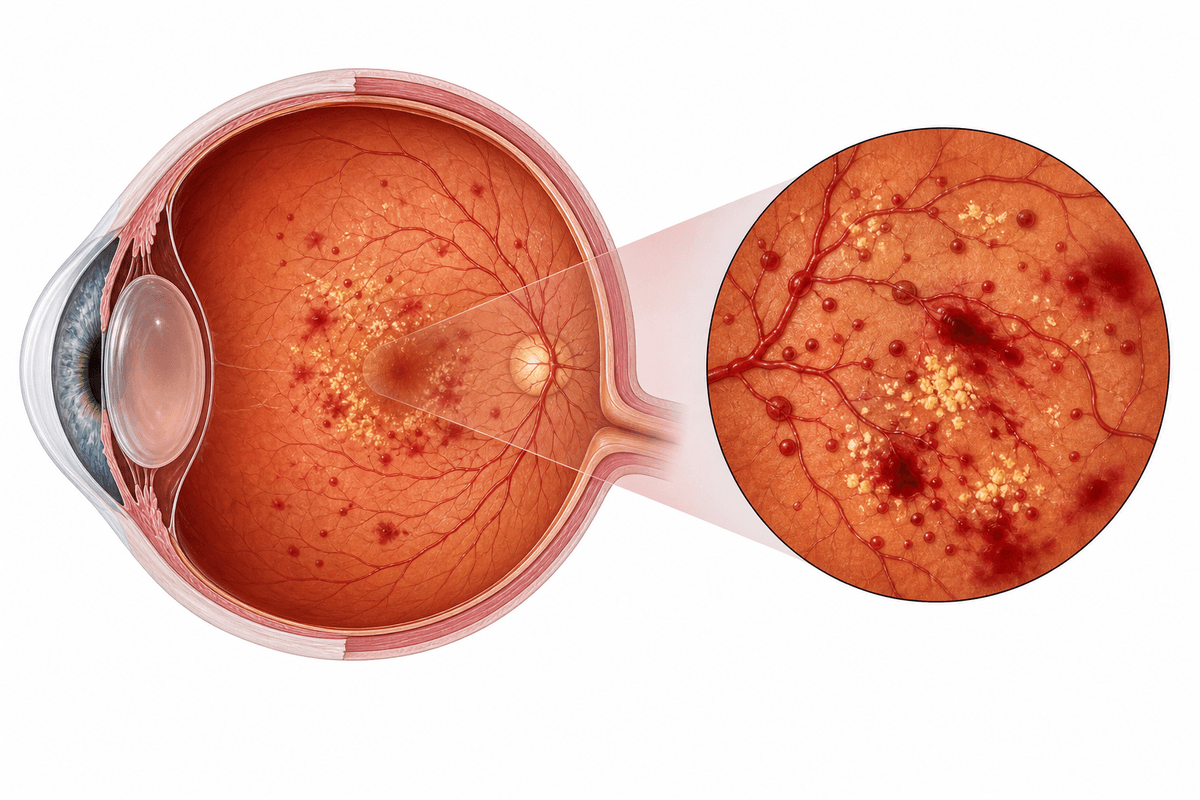
Diabetic Retinopathy is a diabetes complication affecting the retina's blood vessels, commonly seen in Hyderabad among long-term diabetes patients. It progresses from mild vision changes to severe sight-threatening stages if blood sugar remains uncontrolled. Sharp Vision Eye Hospital offers comprehensive screening and treatment under the expertise of Dr. Praneeth Putti, utilizing advanced retinal imaging and laser technologies to preserve vision and prevent blindness.
Early stage characterized by microaneurysms, retinal hemorrhages, and exudates. Blood vessels weaken and leak fluid into the retina, causing mild to moderate vision impairment without new vessel growth.
Advanced stage where new abnormal blood vessels grow on the retina surface. These fragile vessels can bleed into the vitreous cavity, causing sudden vision loss and leading to retinal detachment or glaucoma.
Fluid accumulation in the macula causing swelling and blurred central vision. Can occur at any stage of diabetic retinopathy and is a leading cause of vision loss in diabetic patients requiring immediate intervention.
Multiple factors can contribute to the development and progression of this condition.
Diabetic Retinopathy develops gradually. Recognising symptoms early gives you more treatment options.
From conservative to surgical — we always start with the least invasive option first.
A structured, patient-first approach from first visit to full recovery.
Sharp Vision Eye Hospital conducts thorough dilated fundus examination, OCT imaging, and fundus photography to detect early retinal changes. Dr. Praneeth Putti evaluates retinal vessel health, macular thickness, and stages the disease severity for personalized treatment planning.
We utilize state-of-the-art Optical Coherence Tomography and fluorescein angiography to map retinal blood flow, identify areas of leakage, and quantify macular edema. This precise imaging guides treatment decisions and monitors response to therapy over time.
Based on disease stage, Dr. Praneeth Putti administers appropriate interventions including anti-VEGF injections, focal laser, or pan-retinal photocoagulation. Our clinic provides comfortable office-based procedures with minimal waiting times and comprehensive patient education on each treatment option.
Sharp Vision Eye Hospital works closely with endocrinologists and primary care physicians to ensure optimal blood sugar, blood pressure, and lipid control. We provide regular progress updates and coordinate systemic management alongside ocular treatment for best outcomes.
What to expect at each phase of recovery.
Following laser or injections, patients may experience mild discomfort, light sensitivity, and temporary vision blurring. Antibiotic and anti-inflammatory drops are prescribed. Most resume normal activities within 24-48 hours with gradual vision stabilization.
Vision gradually improves as macular edema resolves and treated areas heal. Monthly follow-ups assess treatment response through OCT measurements. Additional injections or laser sessions may be scheduled based on retinal thickness and visual acuity improvements.
Ongoing monitoring every 3-6 months maintains stability and detects new changes early. Continued systemic diabetes control is critical. Some patients require periodic maintenance injections or laser touch-ups. Vision gains are preserved with adherence to treatment protocols.
Early detection and treatment prevent severe vision loss in over 90% of cases. Anti-VEGF therapy improves vision by 2-3 lines on eye chart in many patients with diabetic macular edema, restoring reading and driving capabilities.
Timely pan-retinal photocoagulation reduces risk of severe vision loss from proliferative diabetic retinopathy by 50-60%. Regular screening catches disease before irreversible damage occurs, maintaining functional independence and quality of life.
Combined medical and laser treatment slows advancement from non-proliferative to proliferative stages. Patients with controlled diabetes and consistent eye care experience significantly lower rates of complications like vitreous hemorrhage and retinal detachment.
Successful treatment restores ability to perform daily activities including reading, recognizing faces, and driving. Preventing vision loss maintains employment capacity, independence, and emotional well-being in diabetic patients throughout their lives.
Untreated diabetic retinopathy progresses inevitably to severe vision loss and blindness. New blood vessel growth causes vitreous hemorrhage obscuring vision, while tractional forces lead to retinal detachment. Advanced disease results in neovascular glaucoma, permanent blindness, and loss of independence, making early intervention critical for preserving sight.
All diabetic patients should have comprehensive dilated eye examinations annually, or more frequently if retinopathy is detected. Seek immediate care if you experience sudden vision loss, shower of floaters, flashing lights, or a curtain-like shadow across your visual field. Early symptoms like blurred vision or difficulty reading warrant prompt evaluation by Dr. Praneeth Putti at Sharp Vision Eye Hospital to prevent irreversible damage.
Early treatment means more options and better outcomes. Book a consultation to understand your condition and explore the right path forward.