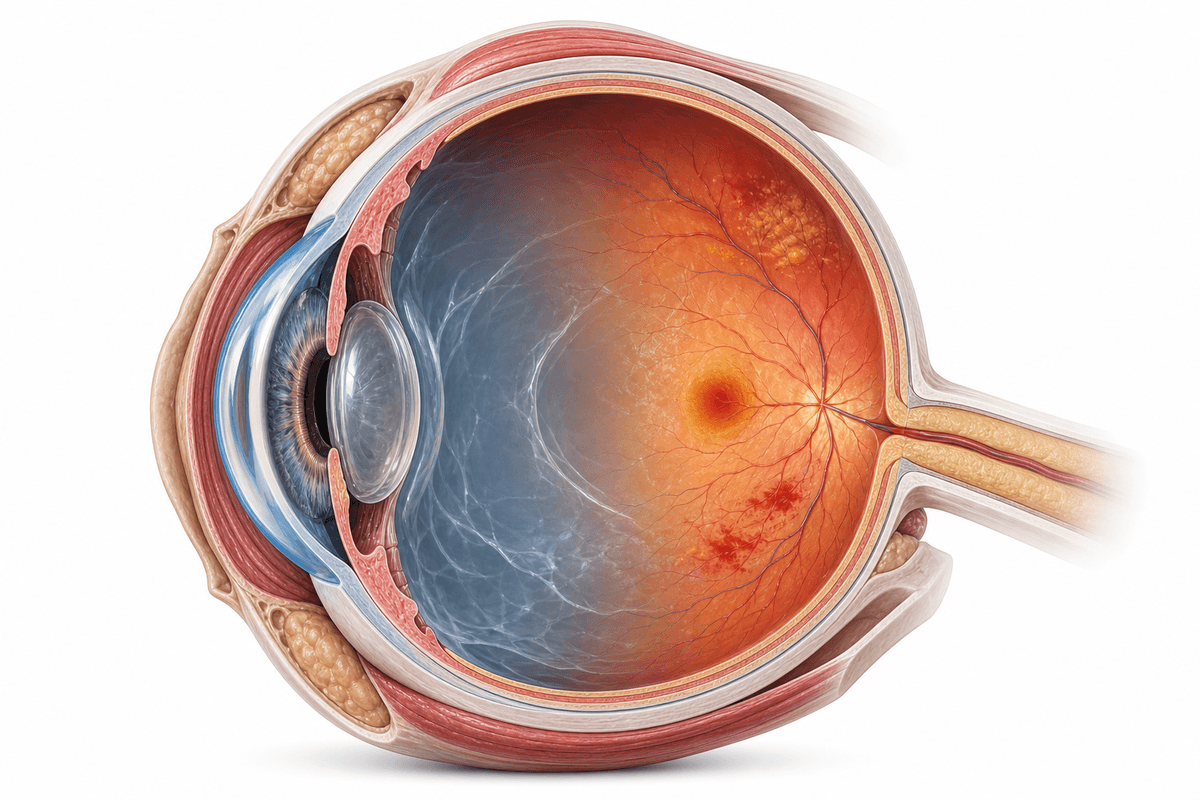
Treated by Dr. Praneeth Putti at Sharp Vision Eye Hospital
Retinal Disorders in Hyderabad encompass a range of conditions affecting the light-sensitive tissue at the back of the eye, which is crucial for vision. These disorders can lead to vision impairment or blindness if left untreated, making early detection and intervention essential. Sharp Vision Eye Hospital, under the expertise of Dr. Praneeth Putti, provides comprehensive diagnostic and treatment services for all types of retinal conditions.
A complication of diabetes that damages blood vessels in the retina, leading to vision loss. It progresses through stages from mild nonproliferative to proliferative diabetic retinopathy with abnormal blood vessel growth.
A progressive condition affecting the macula, the central part of the retina responsible for sharp vision. It occurs in dry and wet forms, with the wet form involving abnormal blood vessel growth beneath the retina.
A serious condition where the retina separates from its underlying supportive tissue, cutting off oxygen and nutrient supply. It requires immediate surgical intervention to prevent permanent vision loss.
Multiple factors can contribute to the development and progression of this condition.
Retinal Disorders develops gradually. Recognising symptoms early gives you more treatment options.
From conservative to surgical — we always start with the least invasive option first.
A structured, patient-first approach from first visit to full recovery.
Sharp Vision Eye Hospital conducts detailed retinal examinations using advanced imaging technologies including OCT, fundus photography, and fluorescein angiography to accurately diagnose the specific retinal disorder and assess its severity.
Dr. Praneeth Putti develops customized treatment protocols based on the type and stage of retinal disorder, patient's overall health, and visual goals, ensuring optimal outcomes with the most appropriate intervention.
Our hospital is equipped with state-of-the-art surgical facilities and the latest vitreoretinal surgical instruments, enabling Dr. Putti to perform complex retinal procedures with precision and safety, including vitrectomy and retinal detachment repair.
Sharp Vision Eye Hospital provides comprehensive post-treatment care with regular monitoring visits to track healing progress, manage any complications, and adjust treatment as needed to ensure the best long-term visual outcomes.
What to expect at each phase of recovery.
In the first 24-48 hours after treatment, patients may experience mild discomfort, light sensitivity, or blurred vision. Eye drops and medications are prescribed to prevent infection and reduce inflammation. Positioning instructions may be required after gas bubble procedures.
Vision gradually stabilizes as the retina heals and swelling subsides. Patients attend follow-up appointments for monitoring and may need to avoid strenuous activities, heavy lifting, or air travel if gas bubble was used. Most daily activities can be resumed with caution.
Regular retinal examinations continue for months to years to monitor for recurrence or progression. Patients with chronic conditions like diabetic retinopathy require ongoing surveillance and may need additional treatments. Vision improvement continues for several months after surgical interventions.
Early diagnosis and treatment of retinal disorders can successfully preserve existing vision in 80-90% of cases, preventing further deterioration and maintaining quality of life for patients.
Many patients experience significant improvement in visual acuity and reduction in distortion after treatment, particularly with anti-VEGF therapy for macular edema and wet AMD, with some gaining several lines of vision.
Surgical interventions for retinal detachment have success rates exceeding 90% for initial procedures, with most patients retaining functional vision when treated promptly before macular involvement occurs.
Ongoing treatment and monitoring effectively control progressive retinal diseases like diabetic retinopathy, reducing the risk of severe vision loss by 50-70% and maintaining stable vision over years with appropriate compliance.
Untreated retinal disorders progressively worsen and can lead to permanent, irreversible vision loss or complete blindness. Conditions like retinal detachment require emergency treatment within hours to days to prevent permanent damage. Chronic disorders such as diabetic retinopathy and macular degeneration gradually destroy retinal cells, resulting in severe visual impairment that significantly impacts independence, quality of life, and ability to perform daily activities.
Seek immediate medical attention if you experience sudden onset of floaters, flashes of light, a curtain or shadow across your vision, or sudden vision loss, as these may indicate retinal detachment or other serious conditions requiring emergency treatment. Schedule an appointment with Dr. Praneeth Putti at Sharp Vision Eye Hospital if you notice gradual vision changes, distortion, difficulty reading, or dark spots in your vision. Regular retinal screenings are essential for individuals with diabetes, high myopia, or family history of retinal disorders to detect problems early when treatment is most effective.
Early treatment means more options and better outcomes. Book a consultation to understand your condition and explore the right path forward.