Treated by Dr. Praneeth Putti at Sharp Vision Eye Hospital
Opticals in Hyderabad provide essential eyewear solutions including prescription glasses, contact lenses, and protective eyewear for vision correction and eye health. Quality optical services ensure proper lens selection, frame fitting, and ongoing eye care support for various refractive errors and visual needs. Sharp Vision Eye Hospital offers comprehensive optical services with expert guidance from Dr. Praneeth Putti.
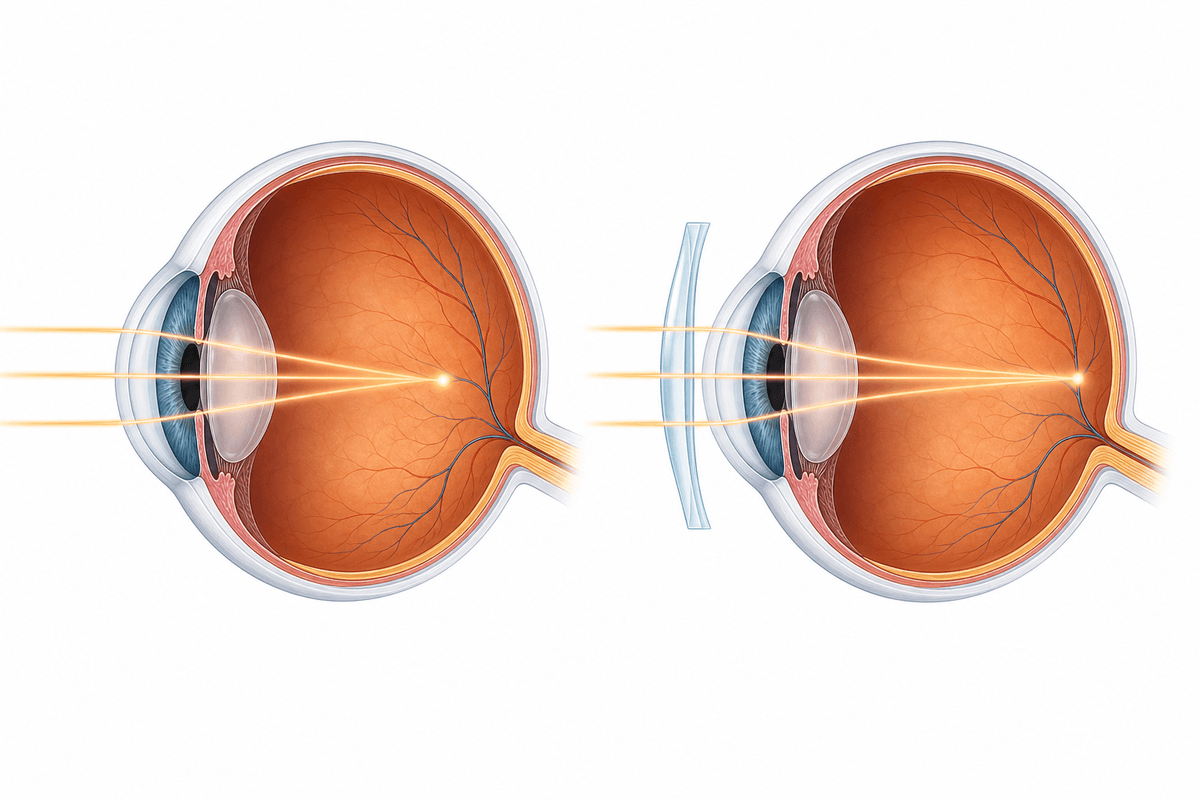
Corrective lenses mounted in frames designed to address refractive errors including myopia, hyperopia, astigmatism, and presbyopia. Available in various lens materials, coatings, and frame styles to suit individual lifestyle and aesthetic preferences.
Thin corrective lenses placed directly on the eye surface for vision correction without visible frames. Options include daily disposable, monthly replacement, toric for astigmatism, multifocal for presbyopia, and specialized lenses for various eye conditions.
Protective and therapeutic eyewear including computer glasses with blue light filtering, sports eyewear, safety glasses, low vision aids, and post-surgical protective eyewear. Designed for specific visual tasks and eye protection requirements.
Multiple factors can contribute to the development and progression of this condition.
Opticals develops gradually. Recognising symptoms early gives you more treatment options.
From conservative to surgical — we always start with the least invasive option first.
A structured, patient-first approach from first visit to full recovery.
Sharp Vision Eye Hospital conducts thorough eye examinations including visual acuity testing, refraction, binocular vision assessment, and ocular health evaluation by Dr. Praneeth Putti to determine precise optical requirements and identify any underlying eye conditions.
Our optical experts analyze lifestyle needs, occupational requirements, and aesthetic preferences to recommend optimal lens types, materials, coatings, and frame selections tailored to each patient's unique vision correction needs and daily activities.
Expert technicians ensure accurate pupillary distance measurements, proper frame alignment, lens positioning, and comfortable fit with detailed instructions on care, maintenance, and proper usage for optimal visual performance and eye health.
Sharp Vision Eye Hospital provides continuous support with adjustment services, vision monitoring, lens updates as prescriptions change, and regular eye health assessments to ensure long-term visual comfort and optimal eye health outcomes.
What to expect at each phase of recovery.
First few days to two weeks involve adjusting to new prescription strength, lens design, or contact lenses. Patients may experience mild distortion, depth perception changes, or awareness of frames which typically resolve with consistent wear.
Two to four weeks where visual system fully adapts to new optical correction. Any minor adjustments to frame fit, lens positioning, or contact lens parameters are made to ensure maximum comfort and visual clarity.
Ongoing period of comfortable eyewear use with regular cleaning, proper storage, and annual vision assessments. Prescription updates as needed to maintain optimal vision correction and eye health through changing visual demands.
Patients experience significantly clearer vision at required distances, enabling comfortable reading, driving, computer work, and daily activities without eye strain or visual fatigue.
Proper vision correction improves work productivity, safety during activities, academic performance, and overall independence in performing daily tasks with confidence and comfort.
Accurate optical correction eliminates compensatory eye muscle tension, reducing chronic headaches, eye fatigue, and discomfort associated with uncorrected refractive errors and improper vision correction.
Quality optical solutions with UV protection, blue light filtering, and proper vision correction help prevent long-term eye damage, digital eye strain, and support overall ocular health throughout life.
Uncorrected refractive errors lead to chronic eye strain, persistent headaches, reduced work productivity, and compromised quality of life. Prolonged squinting and visual stress can cause eye muscle fatigue, while inadequate vision correction increases accident risks during driving and daily activities. Children with uncorrected vision problems may experience learning difficulties and developmental delays.
Seek optical consultation when experiencing blurred vision, difficulty reading, frequent headaches, eye strain after screen time, or squinting to see clearly. Annual eye examinations are recommended for prescription updates, even without noticeable vision changes. Immediate consultation is needed for sudden vision changes, contact lens discomfort, or persistent eye irritation with eyewear use.
Early treatment means more options and better outcomes. Book a consultation to understand your condition and explore the right path forward.