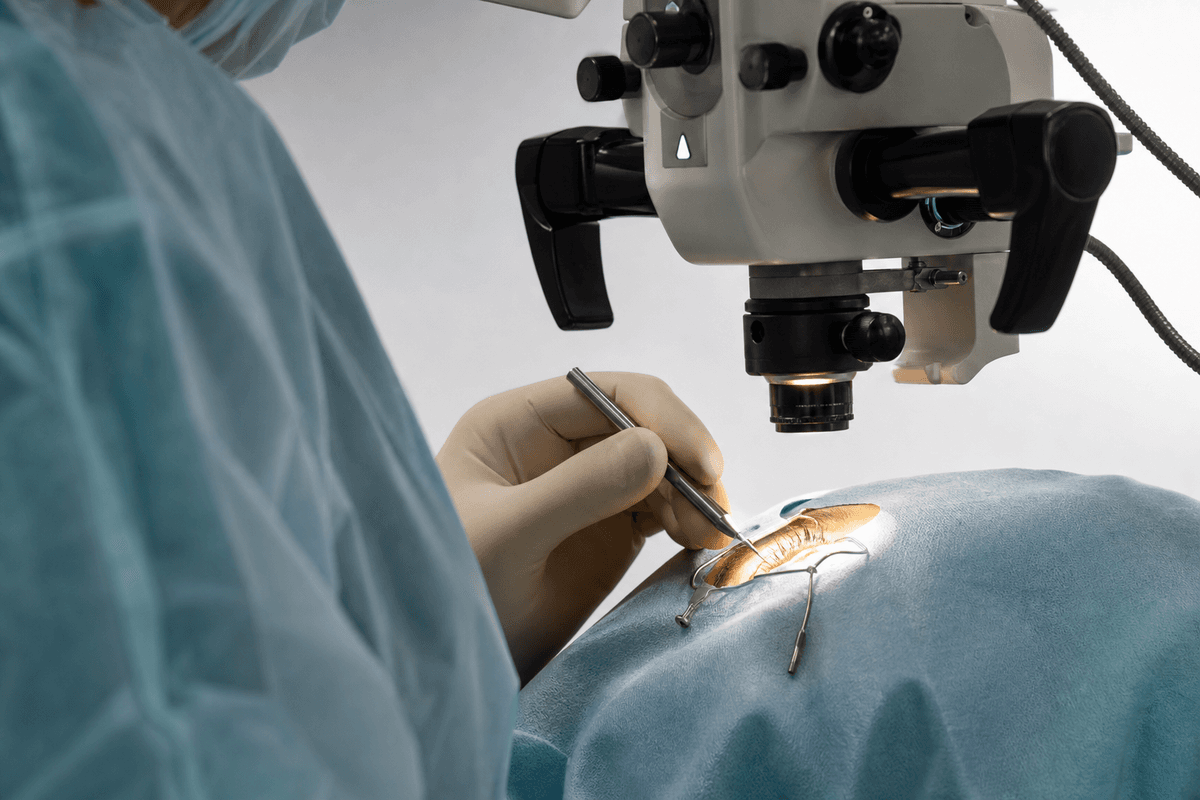
Performed by Dr. Praneeth Putti at Sharp Vision Eye Hospital
Oculoplasty is a specialised branch of eye surgery that focuses on the structures around the eye — eyelids, tear ducts, the eye socket (orbit) and surrounding tissues. Procedures range from correcting drooping eyelids and blocked tear ducts to reconstructing the orbit after injury or tumour removal. At Sharp Vision Eye Hospital in Shaikpet, these procedures are performed by Praneeth Putti to restore both function and appearance.
We believe in honest, upfront disclosure so you can make an informed decision.
A step-by-step look at what happens during this procedure.
Local anaesthesia with sedation is used for simpler eyelid procedures; general anaesthesia is given for more complex orbital surgery or when the patient prefers to be fully asleep.
The surgeon makes precise incisions along the natural creases of the eyelid or inside the conjunctiva, depending on the condition being treated, to minimise visible scarring.
Tissue is repositioned, removed or reconstructed — for example, tightening the levator muscle in ptosis, removing a tumour, repairing an orbital fracture, or opening a blocked tear duct.
Incisions are closed with fine sutures. In some cases dissolving sutures are used; in others they are removed after about a week.
You are monitored in a recovery area. Most patients go home the same day; a few may stay overnight depending on the extent of surgery.
A structured, patient-first approach from first consultation to full recovery.
The surgical team at Sharp Vision Eye Hospital examines your eyes and surrounding structures, discusses your symptoms and goals, and explains which procedure is appropriate and what to expect.
You receive clear instructions on medication adjustments, fasting and arrangements for the day of surgery. Any questions about anaesthesia or recovery are answered.
Procedures are performed in a sterile operating theatre with equipment designed for delicate eyelid and orbital work, ensuring precision and safety.
You are given wound-care instructions, medications to control pain and prevent infection, and scheduled for review appointments to monitor healing and address any concerns.
What to expect at each stage of your recovery journey.
Swelling and bruising are most pronounced. Use cold compresses as advised, keep your head elevated and avoid strenuous activity. Follow all wound-care and medication instructions from your clinical team.
Bruising fades and stitches are removed or dissolve. You can usually resume light activities, but avoid heavy lifting, bending or rubbing the eyes. Vision may still fluctuate slightly.
Swelling continues to settle and scars mature. The final contour and symmetry become apparent over several months. Attend all follow-up appointments so healing is monitored.
Oculoplasty can lift a drooping eyelid to restore the field of vision, or correct an eyelid that turns in or out to protect the eye surface and reduce irritation.
Opening a blocked tear duct can reduce persistent tearing and recurrent infections, though some patients may need a second procedure if scarring recurs.
Surgery can repair fractures or reconstruct the socket after tumour removal, helping to restore appearance and support an artificial eye if needed.
Even with careful technique, some scarring is inevitable and perfect symmetry between the two sides is difficult to achieve. Revision surgery is sometimes needed.
The right choice depends on your diagnosis, risks and circumstances — discussed with you at your consultation.
Mild ptosis or watering that does not affect vision or comfort may be watched without surgery, using lubricating drops or glasses with a ptosis crutch to lift the lid.
Thyroid eye disease or inflammation may respond to medications or orbital decompression without eyelid surgery. Blocked tear ducts in infants often open on their own with gentle massage.
Botulinum toxin or filler injections can address some cosmetic concerns around the eyes, but they do not correct structural problems like true ptosis or entropion.
Let's clear up some of the most common myths about oculoplasty.
Get a personalised assessment from an experienced specialist. Understand your options, ask your questions, and decide with confidence.